


The Conversation That Changed Everything: How One Global Executive Learned to Lead Through Understanding, Not Authority
By Atip Muangsuwan
“The greatest gift a leader can give isn’t a solution. It’s the ability to create solutions through their people.”
Atip Muangsuwan
CEO Coach and Coach Supervisor
Janet had built her career on results.
As an executive at a global hospitality company—overseeing hotels and resorts across multiple continents—she had a reputation for getting things done. She knew the numbers. She knew the strategy. She knew what excellence looked like.
But none of that seemed to matter with her newest subordinate.
Every time Janet requested a meeting, he declined. Busy with something else, he would say. Working on another priority. She watched as deadlines slipped, expectations went unmet, and the gap between what she needed and what he delivered grew wider by the week.
“He doesn’t seem to understand his role,” Janet told me during our coaching session. “And worse—he doesn’t seem to care what I think.”
She paused. Then, she asked the question that so many leaders ask when they reach this point:
“What am I doing wrong?”
The Hidden Trap of High-Performing Leaders
Janet’s situation is one I’ve seen play out in corner offices across the globe. Brilliant leaders, promoted for their technical expertise and results-driven approach, suddenly face a terrifying reality: authority doesn’t guarantee followership.
Commands don’t create commitment.
Janet had been treating leadership like a transaction. She gave instructions. She expected compliance. When compliance didn’t come, she grew frustrated. And the more frustrated she became, the more she pushed—which only made her subordinate pull further away.
“I thought I was being clear,” she admitted. “But clarity without connection isn’t leadership. It’s just noise.”
That’s when we began our work together. And that’s when Janet discovered a truth that would transform her leadership forever:
You cannot change people. But you can inspire them to change themselves.
The First Breakthrough: Setting Clear Expectations
We started with a principle so simple that most leaders overlook it: clarity.
Drawing from The One-Minute Manager—the timeless classic by Ken Blanchard and Spencer Johnson—Janet learned that effective management begins with three deceptively simple practices.
One-Minute Goals. Janet sat down with her subordinate and, for the first time, co-created clear, measurable expectations. Not vague aspirations. Not implied standards. Specific goals with clear timelines. She discovered that what she thought was “obvious” wasn’t obvious at all. He had been operating with a completely different understanding of his role.
One-Minute Praisings. When he did something right, Janet caught him doing it—and praised him immediately. Not a generic “good job,” but specific, genuine acknowledgment of what he did well and why it mattered.
One-Minute Reprimands. When things went wrong, she addressed it promptly—not weeks later in a performance review, but in the moment, with clarity and without cruelty.
The shift was immediate. But Janet knew this was only the beginning.
The Second Breakthrough: Engagement Before Expectation
“Setting goals is important,” Janet reflected. “But goals mean nothing if the person doesn’t trust you.”
That’s when I introduced her to the EE-FI Leadership Model—a framework I developed over years of coaching leaders through exactly this kind of challenge.
The model is simple: Engage → Empathize → Fulfill → Influence.
Janet had been skipping the first three steps and expecting the fourth. She wanted influence without investment. She wanted trust without relationship.
“You cannot understand someone you don’t genuinely connect with,” I reminded her.
So, Janet changed her own approach. Instead of demanding more meetings, she invited conversation. Instead of pushing her agenda, she asked about his. She scheduled regular one-on-ones—not to check progress, but to build connection.
She asked questions she had never asked before: What’s most important to you in this role? What’s the hardest part of your work right now? What would make this easier for you?
And for the first time, he answered honestly.
He had been overwhelmed. He had felt unsupported. He had been avoiding Janet not because he didn’t respect her, but because he felt he couldn’t meet her expectations—and didn’t know how to tell her.
Janet listened. And everything changed.
The Third Breakthrough: The Art of the Conversation
Janet had spent years mastering the art of telling. Now she needed to master the art of asking.
Enter the LAR-SE Model—a five-step framework for effective communication that transforms ordinary conversations into breakthrough dialogues.
L — Listen actively and deeply. Not for the words. Listen for the needs, the expectations, the motivations. Listen for what keeps them up at night.
A — Ask powerful questions. Don’t assume you know. Ask. “What’s most important to you in this project?” “What’s standing in your way?”
R — Reflect back what you hear. This is where most people skip. Reflection isn’t parroting. It’s saying, “Let me make sure I understand…”.
S — Share from your side. Now it’s your turn. Share your thoughts, feelings, needs, stories, and feedback. Help them understand you, too.
E — Empower or encourage. Help them feel capable of taking action.
Janet realized something profound: she had been doing the “Share” part constantly. But she had never done the Listen, Ask, and Reflect parts first.
No wonder nobody understood her.
She hadn’t taken the time to understand them.
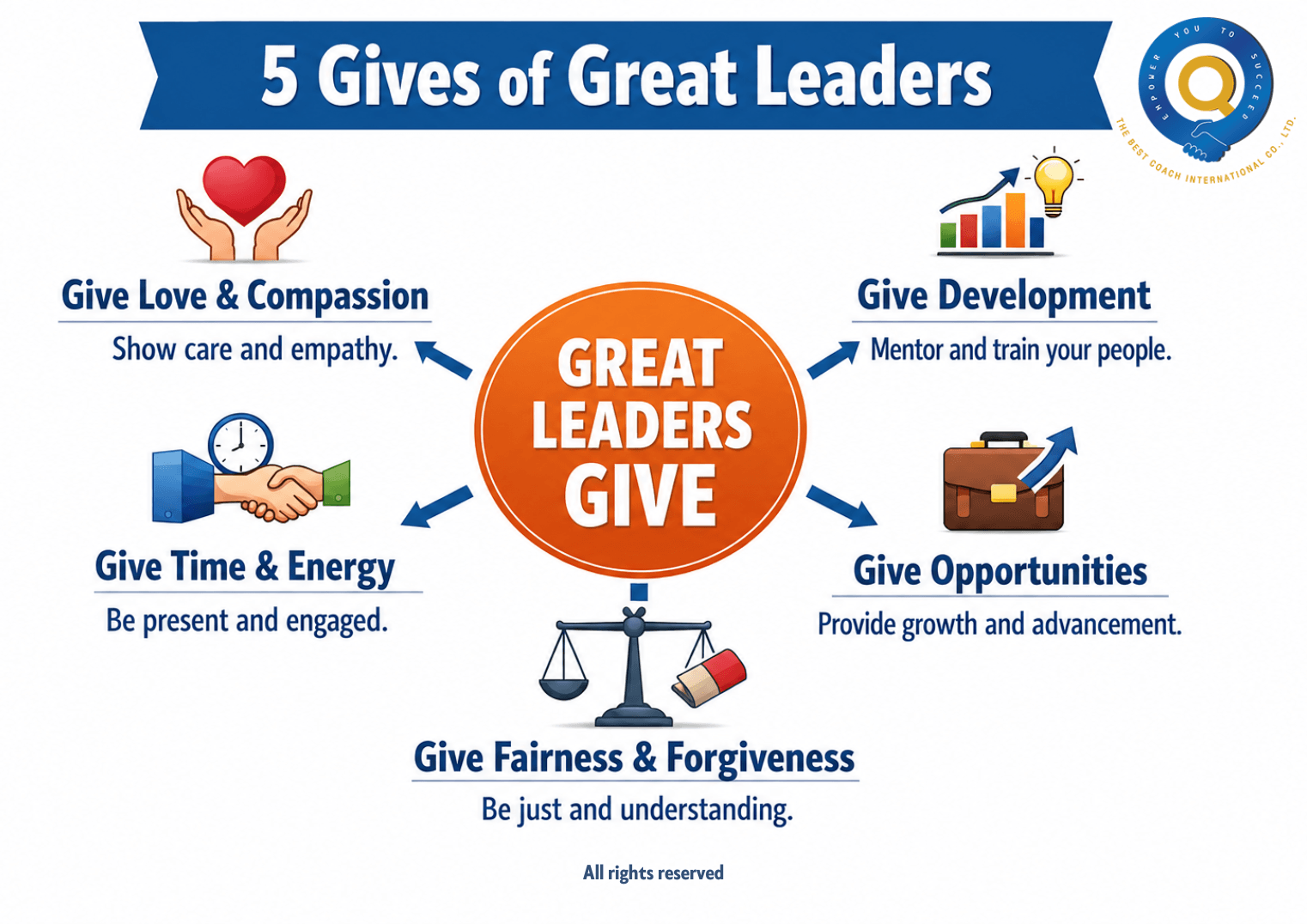
The Fourth Breakthrough: The 5 Gives
As Janet’s conversations deepened, she discovered one final piece of the puzzle.
Great leaders don’t just manage. They give. They’re the givers for their people.
Give love & compassion. People need to feel cared for, not just managed.
Give knowledge. Provide training, mentoring, and coaching. Help your people grow.
Give your time. Invest in regular one-on-one sessions. Show them they matter.
Give opportunities. Delegate meaningful work. Assign important projects. Help them build their careers. Give them promotions.
Give fairness & forgiveness. No bias. When people make mistakes—and they will—give them a chance to correct and improve.
Janet began applying these principles. And something remarkable happened.
Her subordinate stopped avoiding her. He started seeking her out. He began taking ownership of his work. He met—and eventually exceeded—every expectation she had set.
“I stopped trying to control him,” Janet told me. “And I started trying to understand him. That changed everything.”
The One-Sentence Summary
At the end of our coaching session, I asked Janet to summarize what she had learned in one sentence.
She smiled and said:
“Seek first to understand, then to be understood.”
I shared my own:
“Set clear expectations of what you want with your subordinates.”
Two sentences. Two principles. One transformed leader.
What This Means for You
If you’re reading this and feeling a familiar frustration—the sense that your team doesn’t get it, doesn’t care, doesn’t align—I want you to know something.
The problem isn’t your people.
The problem is the gap between what you think you’re communicating and what they’re actually hearing.
The good news? That gap can be closed. Not with more authority. Not with louder demands. But with better conversations.
With engagement that builds trust.
With empathy that unlocks understanding.
With frameworks that turn confusion into clarity.
The Leader as Coach
This is what I do. I work with global executives like Janet—leaders who have achieved extraordinary success but find themselves stuck when it comes to leading people.
I help them move from command-and-control to connection-and-collaboration. From telling to asking. From managing to coaching.
The greatest gift a leader can give isn’t a solution. It’s the ability to create solutions through their people.
If Janet’s story resonates with you, I invite you to explore your story with me. Who knows, your leadership might just be transformed, too.
About Atip Muangsuwan: Atip is an executive leadership coach who specializes in helping high-achieving leaders overcome internal barriers to unlock their full potential and drive organizational success. Through a blend of strategic frameworks and profound personal insights, he empowers leaders in transforming their mindsets, emotional states, and behaviors for lasting impact.
SHARE :
Facebook
LinkedIn
Twitter
RECOMMENDED ARTICLES :