


The Silent Crisis in the Corner Office: One CEO’s Journey to Re-ignite a Workforce and Stop Burnout
By Atip Muangsuwan
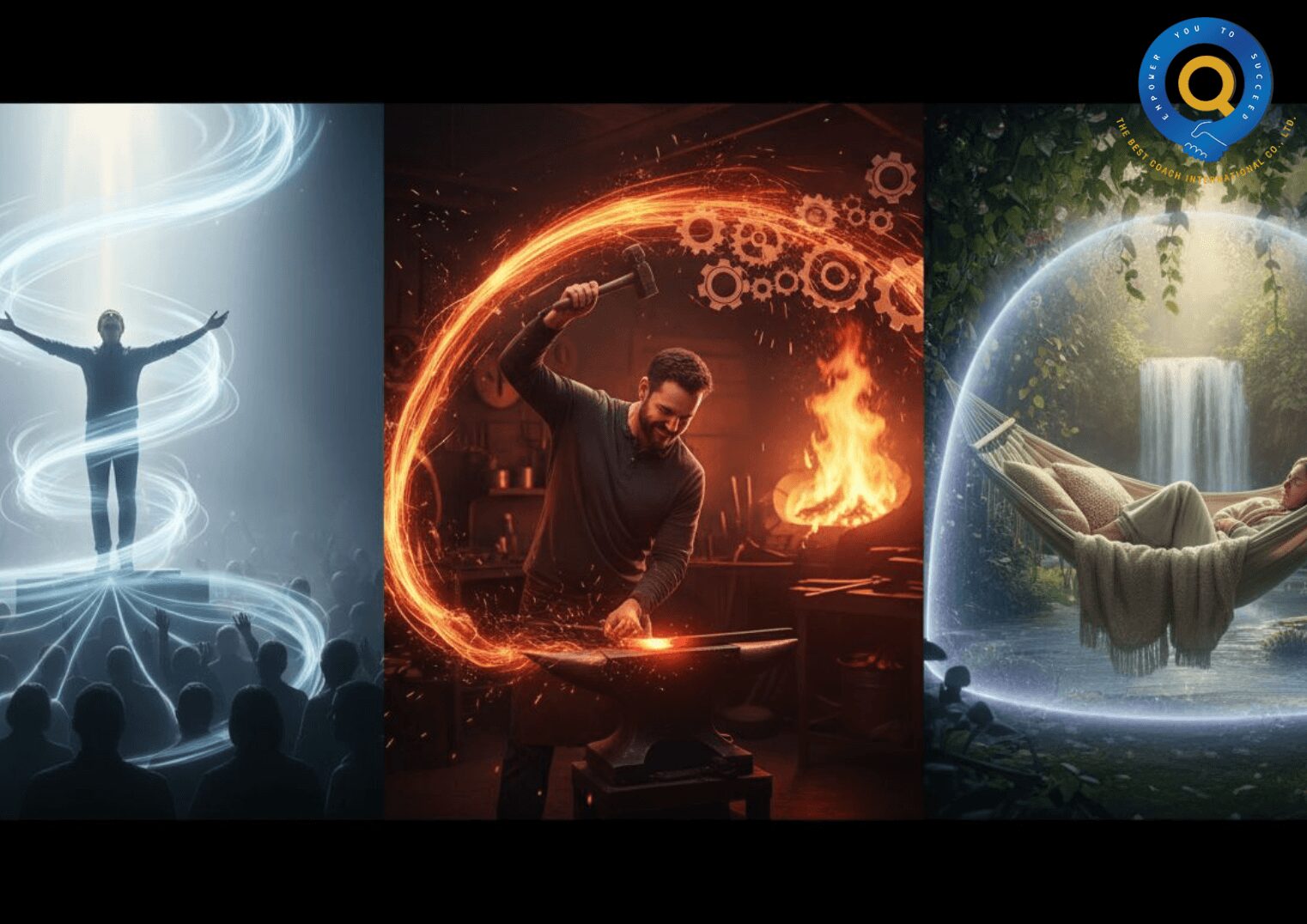
“When you make people feel important, you give them oxygen. When you align their work with their passion, you give them fire. And when you protect their time to rest, you give them sanctuary.”
Atip Muangsuwan
CEO Coach and Coach Supervisor
The weight of leadership can feel like a slow descent into a suffocating fog. For Linda, a leader at the helm of a sprawling global conglomerate, that fog had a name: burnout. It was a silent epidemic, spreading through her workforce and threatening to paralyze everything she had built.
The reports landed on her desk every Monday, but the real issue was what they didn’t say. The spreadsheets showed productivity dips, safety infractions, and a worrying trend in delivery delays. But the numbers couldn’t capture the hollow looks in her team’s eyes, the quiet hum of exhaustion that now filled her global headquarters like a low-voltage current.
Linda is the CEO of a global conglomerate. She is ambitious, determined, and self-driven. She aspires to be number one in her field. Her life’s mission has been to build a legacy. Yet, as she stared out her floor-to-ceiling window at the cityscape below, she felt a growing sense of unease. “There are sixty to seventy percent of my people starting to get burned out,” she confided in one of our coaching sessions. The relentless backlog of work, a tidal wave of new contracts, and a workforce stretched to its absolute limit were beginning to crack the foundation of her company.
The long-term solutions were obvious: recruit more people, leverage new AI technologies, and ease the load. But those were future projects. She needed an immediate salve for an open wound. She needed to know how to motivate her people and, more urgently, how to stop them from breaking.
(Note: This article was inspired by a coaching session with a global executive. The names and identifying details have been changed to protect client confidentiality.)
The Number One Law of Human Nature
Her question was a common one, but the answer lies in a truth as old as humanity itself. As we began our exploration, I asked Linda to consider the number one law of human nature. Before we can discuss strategy, metrics, or quarterly goals, we must understand the engine that drives every single person who walks through our doors.
Long before Linda’s high-stakes boardrooms, philosopher John Dewey articulated the deepest urge in human nature: the desire to be important. Dale Carnegie, the master of influence, built an empire on this concept. Humans have an intrinsic, primal urge to feel significant in the eyes of others. We want the world to acknowledge, “I do exist here.”
Linda listened intently. She was a practical leader, a builder of empires and supply chains. But as the concept landed, I saw a shift in her posture.
“You see, Linda,” I explained, “human beings don’t just need to process data or hit KPIs. They need to be seen. They need to be felt. They need to be heard. And they need to be valued.”
In that moment, the light flickered on for her. She realized that her sophisticated incentive plans and tight operational controls had missed the point entirely. She had been managing tasks, not tending to the souls who performed them.
Insight: Treating People as “VIPs”
If the deepest need is for significance, then the leader’s primary role shifts from director to audience. We began to formulate a new playbook.
“If the deepest need is for significance, the leader’s primary role shifts from director to audience. ‘Treat your people as your VIPs,’ I emphasized.”
“If the deepest urge is to be important,” I stressed, “then your people need to feel like the most important people in the room. Treat them as your VIPs. “
This means abandoning the automated “good job” emails for spontaneous, on-the-spot praise. Praise must be immediate and genuine. It means creating cultures of recognition that celebrate specific behaviors—safety innovations, cost-saving Kaizen, quality excellence—not just quarterly results. When we shine a stage light on someone and say, “You matter,” we are not being soft. We are feeding a primal hunger.
Linda got to work. She planned a Town Hall meeting for the end of the month, not to review numbers, but to throw a celebration. She designed awards for those who contributed significantly, showcasing their victories to the entire company. She realized that a public “thank you” carries the weight of gold.
The “Flow State“: The Antidote to Burnout
But recognition is only half the battle. Motivation fills the tank, but burnout drains it. To stop the leak, we had to look at the nature of the work itself.
“Why do the top performers never seem to burn out?” I asked her this powerful question.
Linda thought for a moment. “They just love what they do. They lose track of time.”
“Exactly,” I replied. “They are in a ‘Flow State.'”
Coined by psychologist Mihaly Csikszentmihalyi, the “flow state” is a condition of optimal experience where a person is fully immersed in an activity, characterized by energized focus and enjoyment. When people work in flow, they don’t get tired. They get energized. When people have passion and purpose in their daily roles, they build a natural immunity to burnout.
But how do you manufacture flow in a global conglomerate? You start by linking the individual’s purpose to the company’s purpose.
Linda’s company mission was to supply clean energy to the world to reduce carbon emissions. It is a noble, earth-saving goal. But the logistics manager in Indonesia doesn’t wake up thinking about “saving the world.” He wakes up thinking about optimizing a supply chain.
“Stop telling him the mission,” I added. “Ask him his mission. What is his passion? Does he love solving complex puzzles? Does he love efficiency? Link his personal passion to the organizational purpose. Show him how optimizing that line reduces carbon. Suddenly, he isn’t stacking boxes; he is saving the planet. That is the ‘What’s in it for them?’ —bonuses, salary, and the deep satisfaction of a life aligned with meaning.”
The Sacred Right to Rest
Finally, we addressed the most overlooked tool in the executive arsenal: Rest.
“Even the most powerful machines require scheduled maintenance,” I reminded her. “Human beings are not servers. They cannot simply be rebooted.”
We discussed the necessity of integrating Rest & Recreation into the DNA of the workflow. Not just weekends, but micro-breaks. A fifteen-minute walk. A soccer club on Friday afternoons. A badminton league. Offsite workshops that felt like field trips rather than strategy sessions. When you provide the space for people to breathe, you signal that you see them not just as capital, but as humans. Rest is not a reward for hard work; it is the fuel that makes hard work possible.
The New Definition of Leadership
When our session ended, the fog had lifted for Linda. She left with a one-sentence summary burned into her memory: “Use purpose and passion to motivate people,” she said. “And treat people as your VIPs,” I added.
She walked out of the room with a singular plan. She would leverage a Recognition & Award program. She would use her upcoming Town Hall to treat her workforce like VIPs. She would cascade this approach down to the manager levels using the LAR-SE model (Listen, Ask, Reflect, Share, Empower) in their one-on-ones.
But more than the plan, she left with a great feeling. She felt relaxed. She felt positive energy. And she felt hope.
Because Linda realized a profound truth that day. You cannot lead a workforce if you are fighting against human nature. You can only win by harnessing it. When you make people feel important, you give them oxygen. When you align their work with their passion, you give them fire. And when you protect their time to rest, you give them sanctuary. That is the formula for building an empire that doesn’t just stand tall but stands the test of time.
Leadership Action Steps:
- Host a Town Hall: Create a public stage for recognition. Celebrate those who embody your company’s values.
- Link Purpose to Passion: In your next one-on-one, don’t review a task list. Ask, “What part of this job brings you joy? How can we do more of that?”
- Praise On-the-Spot: Stop waiting for the annual review. If you see a win today, celebrate it right now.
- Protect the Breaks: Ban lunch-at-the-desk culture. Encourage walking meetings and sponsored sports clubs.
Are you ready to stop managing tasks and start leading humans? Discover how to unlock the full potential of your workforce.
Contact me to book your leadership coaching session today.
About Atip Muangsuwan: Atip is an executive leadership coach who specializes in helping high-achieving leaders overcome internal barriers to unlock their full potential and drive organizational success. Through a blend of strategic frameworks and profound personal insights, he empowers leaders in transforming their mindsets, emotional states, and behaviors for lasting impact.
SHARE :
Facebook
LinkedIn
Twitter
RECOMMENDED ARTICLES :