“Read the person and adjust your style—that is the key to personalized leadership.”
Atip Muangsuwan
CEO Coach and Coach Supervisor
In the landscape of modern leadership, the feedback often arrives with the subtlety of a hammer: “You’re too rigid.” For Ken, a senior leader at a global tech company, this critique landed with particular force. His 360-degree survey was clear. His leadership style, effective as it might have been for processes, was failing his people.
He was the leader who, when a subordinate suggested a market-adaptive pricing strategy, refused outright. “We stick to the rules,” he’d said, watching a competitor’s successful maneuver from the sidelines.
Ken didn’t want to be the leader who couldn’t bend. He wanted to build trust, increase engagement, and ultimately, drive better team results. He sought a coaching session with a singular goal: to become a personalized leader.
The session’s mission was to move Ken from a place of self-awareness (“I am rigid”) to a place of actionable strategy (“Here is how I become flexible”). We discovered that personalization isn’t a single soft skill; it’s a toolkit. Here are the five core tools we unpacked to transform Ken’s leadership approach.
Tool 1: The Coach Approach (The Communication Tool)
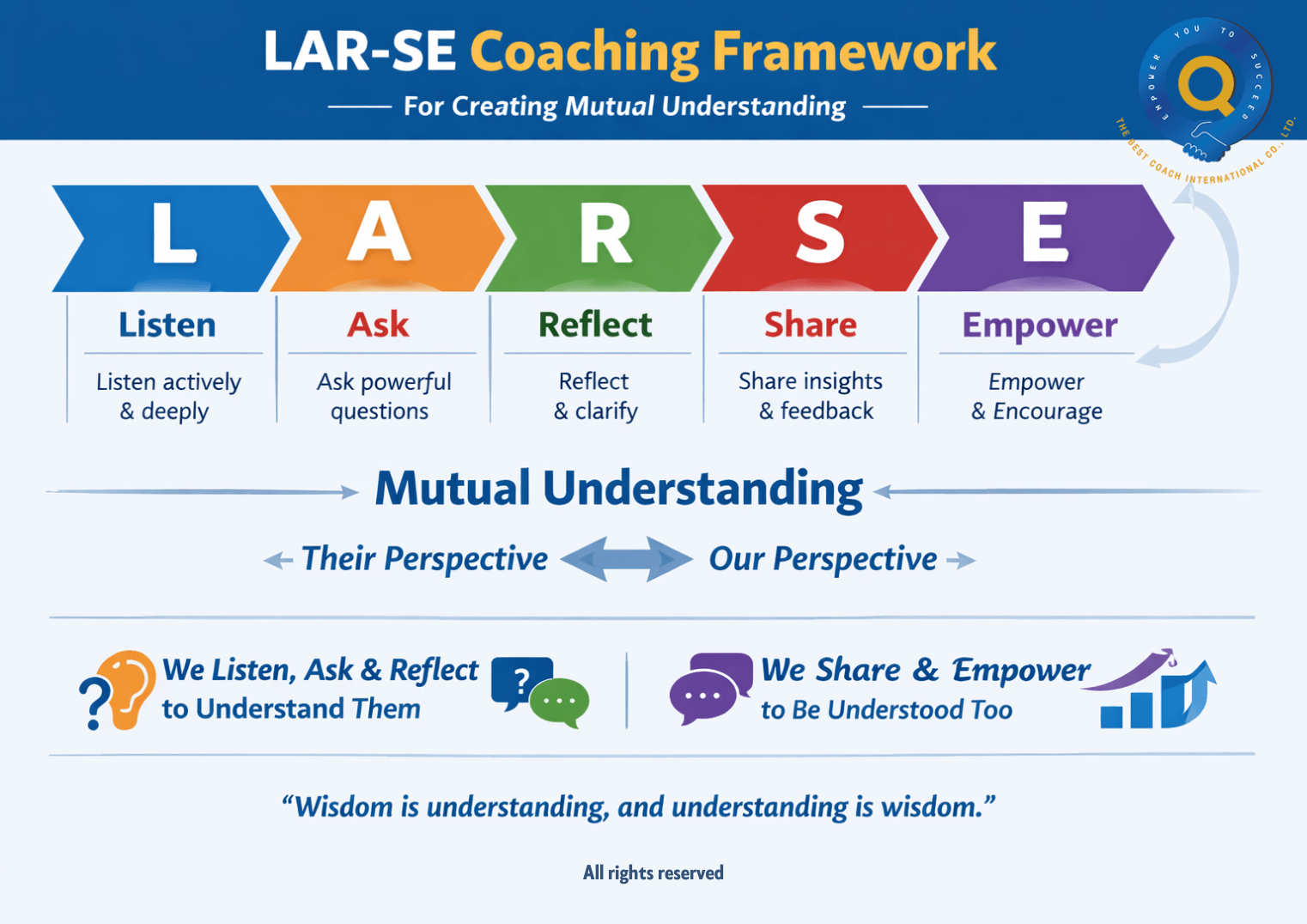
Ken’s default setting was “Tell.” To become flexible, he needed to switch to “Ask.” The Coach Approach is a communication method that shifts the dynamic from monologue to dialogue.
- Listen Actively & Deeply: Not just for facts, but for the emotion and intent behind the words.
- Ask Questions: Use powerful, open-ended questions to provoke thought in others.
- Reflect Back: Paraphrase and summarize to ensure mutual understanding and build the other person’s self-awareness.
- Share Without Attachment: Offer your own stories and perspectives, but remain neutral if the other person chooses a different path. This creates psychological safety.
Tool 2: The EE-FI Leadership Model (The Influencing Tool)
To move Beyond Authority, Ken needed a service-oriented mindset. The EE-FI Model provides the sequence:
- Engage with them frequently and regularly.
- Empathize to deeply understand their perspective, motivations, and fears.
- Fulfill their needs by acting on that understanding to solve their problems.
- Influence naturally emerges as a result of the trust built in the first three steps. It’s the outcome, not the starting point.
Tool 3: The Personalized Leadership Framework (The Situational Tool)
We adapted the classic Situational Leadership model to clarify the terms. Ken learned that being flexible means matching his style to the individual’s development level and the context:
- P1: Directing: For team members who are new or inexperienced in a task (High Directive, Low Supportive).
- P2: Mentoring: For those with some experience who need guidance and encouragement (High Directive, High Supportive).
- P3: Coaching: For capable, self-reliant team members who need a thought-partner to maximize potential (Low/Non-Directive, High Supportive).
- P4: Delegating: For trusted experts who can run independently (Low Directive, Low Supportive).
Crucial Insight: Context matters. A Gen Z new hire might need Directing for company policy, but if they are an AI expert, they need Coaching or Delegating on AI strategy. You must assess the person and the topic.
Tool 4: The C-S-C Framework (The Feedback Tool)
Giving constructive feedback to a diverse team requires a specific structure to ensure the message is received. The C-S-C Framework is simple and powerful:
- C: Care: Begin the conversation by expressing genuine care for the individual. (“I want to chat because I’m invested in your success here…”)
- S: Share: Share your key message, observation, or constructive feedback clearly and specifically.
- C: Care: Close with another caring message, reaffirming your support and belief in them. (“I’m sharing this because I know you’re capable of even more, and I’m here to help.”)
Tool 5: The Principle of “Reading People” (The Mindset Tool)
Finally, we addressed the core mindset. Ken’s rigidity stemmed from a lack of curiosity. We introduced the principle: “Read people like you’re reading your favorite books.”
When you read a favorite book, you are curious, you have interest, you get lost in the characters’ thoughts and motivations. Apply this to your team. Be genuinely fascinated by what makes them tick—their feelings, behaviors, needs, and psychology. This curiosity naturally generates the flexibility needed to adjust your style to fit the “character” in front of you.
Key Insights & The Path Forward
By the end of our session, Ken realized that personalized leadership wasn’t about being “nice”—it was about being effective. His key insights were clear:
- Personalization is a must, and it’s achievable through these five integrated tools.
- Reading people creates genuine curiosity and interest, dissolving rigidity.
- He now has a menu of tools he can pick and choose from, or combine, depending on the situation and the person.
His homework was practical and immediate: apply these tools during his upcoming performance review discussions. The goal wasn’t perfection, but practice. To read his people, and adjust.
Ken’s journey from rigidity to flexibility begins with a single, powerful choice: to see his people not as subordinates to be managed, but as individuals to be understood. And in that understanding, true leadership is found.
Ready to adjust your leadership style in the AI Era? This is one of my coaching works to support leaders like you. Book your discovery session with me now to transform how you lead in the AI Era.
About Atip Muangsuwan: Atip is an executive leadership coach who specializes in helping high-achieving leaders overcome internal barriers to unlock their full potential and drive organizational success. Through a blend of strategic frameworks and profound personal insights, he empowers leaders in transforming their mindsets, emotional states, and behaviors for lasting impact.