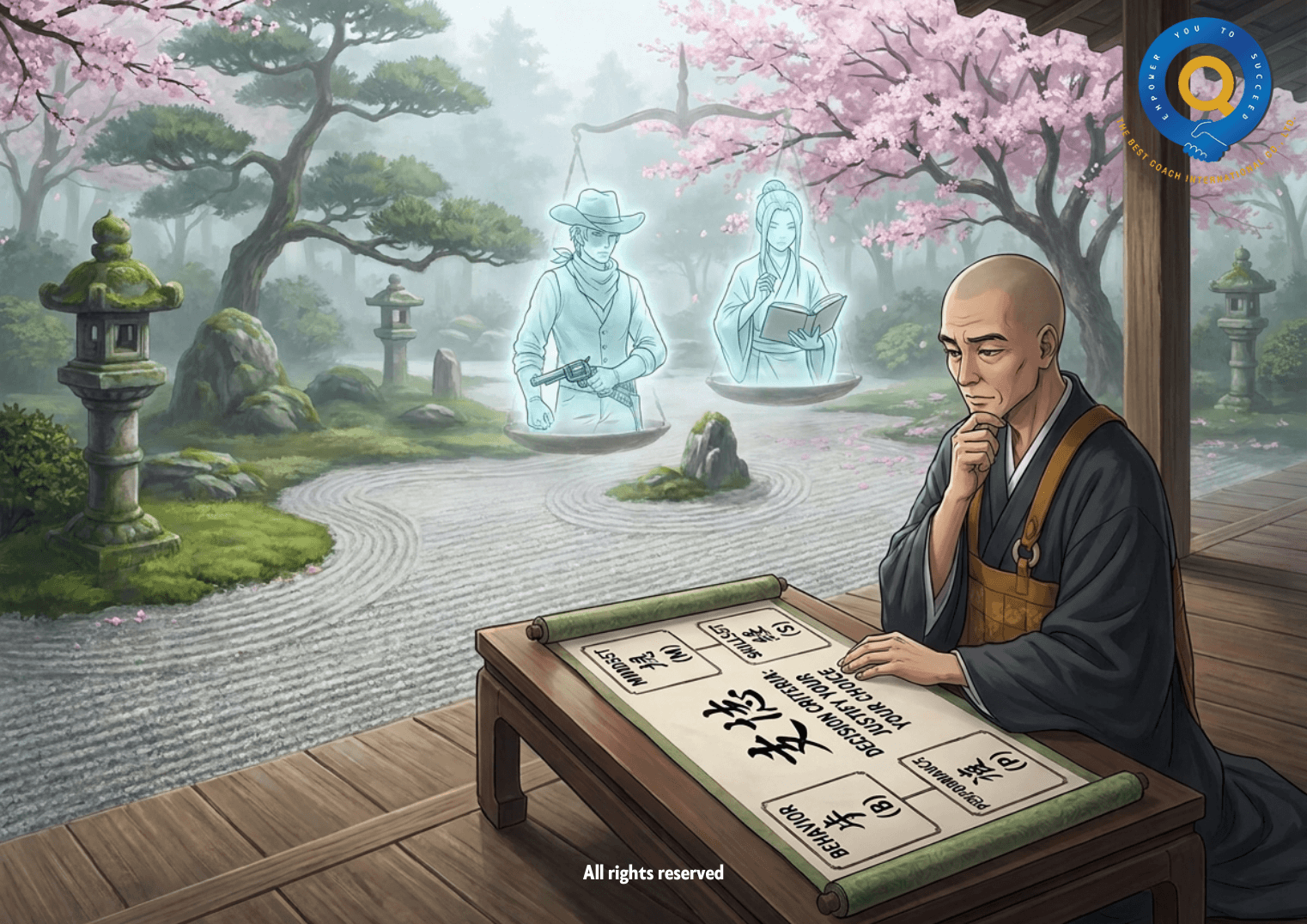


The General Who Was Always Fighting the Last War
By Atip Muangsuwan
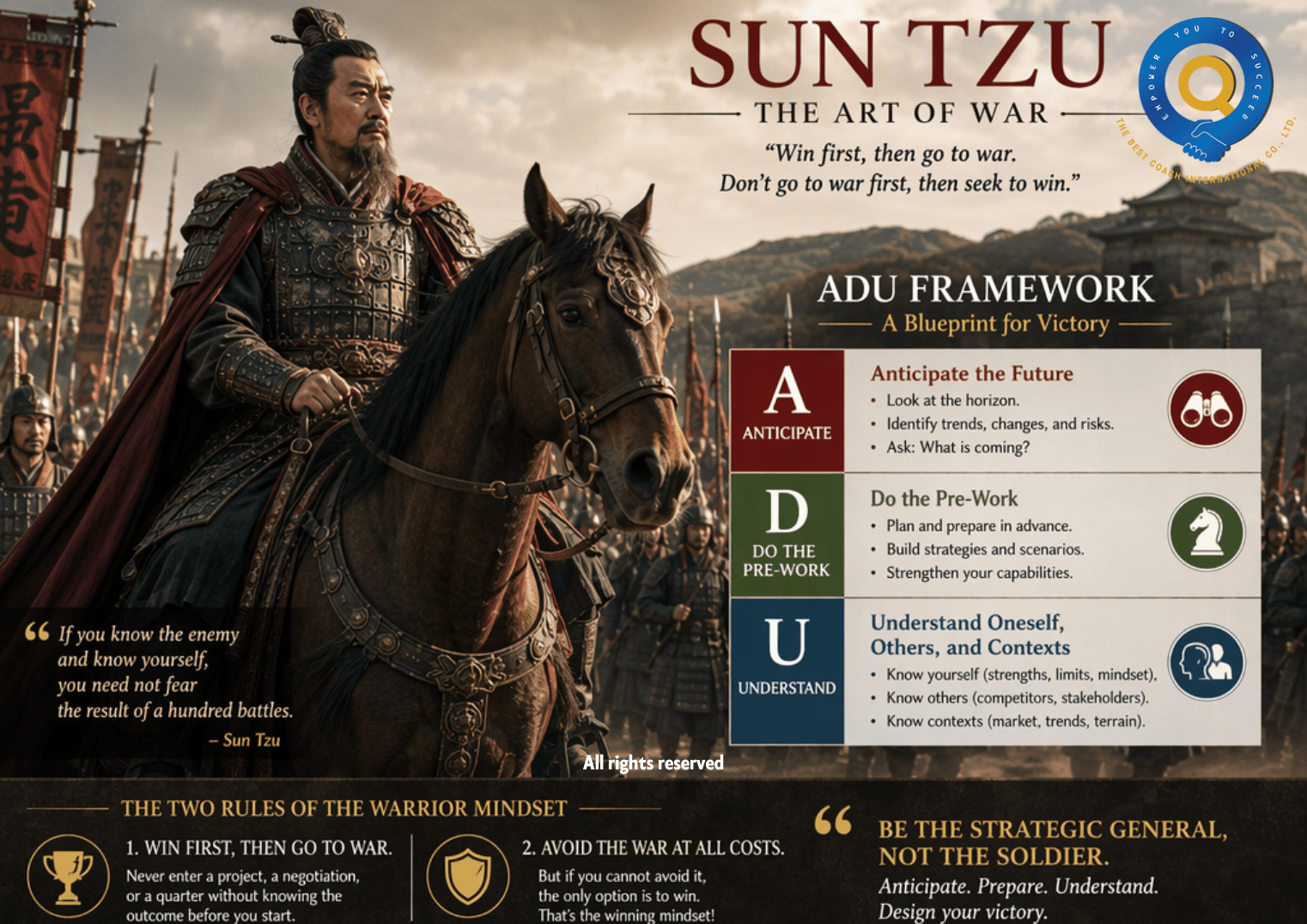
“Win first, then go to war. Don’t go to war first, then seek to win.”
Atip Muangsuwan
CEO Coach and Coach Supervisor
Thomas was a man who thrived in the chaos.
As an executive at a global software giant, he was the one you called when the server crashed, when the client threatened to walk, when the launch date moved up by two weeks. He was a human fire extinguisher. If there was a fire, Thomas put it out. And he was good at it. He rated himself a solid 7 out of 10 on his strategic thinking.
But during one of our coaching sessions together, Thomas admitted something that stopped me in my tracks.
"I'm a good problem-solver," he said, leaning back in his chair. "When people have problems, they come to me. I plan, I prepare. But… I feel like I'm always reacting."
Thomas wasn't a strategist. He was a tactician. He was winning battles, but he was exhausted because he was fighting them one by one. He wanted to become a Leader as Strategist—a man who shapes the future rather than one who merely survives it.
I asked him, "What is the heart and soul of strategic thinking?"
He paused. "Thinking in patterns? Structured or framework thinking? Predicting outcomes or results?"
"Close," I said. "But the heart is simpler. It is the art of Anticipation."
I shared with Thomas one of my favorite sources of wisdom: Sun Tzu’s The Art of War. I told him that whenever I think of the greatest strategist in history, I think of Sun Tzu.
But I didn't just leave him with ancient quotes. I gave him a modern tool I’ve developed over years of coaching global leaders—a simple framework that has become the bedrock of my practice: The ADU Strategic Thinking Framework.
Here is the conversation that changed Thomas’s leadership trajectory.
The ADU Framework: A Blueprint for Victory
1. A: Anticipate the Future
Sun Tzu said, "Victorious warriors win first and then go to war, while defeated warriors go to war first and then seek to win."
Most leaders do exactly what Thomas did: they go to work, wait for the fire, and then try to win. That is expensive, stressful, and slow. Strategic leaders do the pre-work. They anticipate trends, changes, and incidents. They look at the horizon and ask, "What is coming?"
2. D: Do the Pre-Work
This is the planning and preparation phase. If anticipation is the brain, pre-work is the muscle. It is the quiet work done in the dark before the spotlight hits. Thomas realized he was doing "some" planning, but not the rigorous, future-proofing pre-work that distinguishes a good manager from a strategic titan.
3. U: Understand Oneself, Others, and Contexts
This is where the real battle is won. Sun Tzu famously wrote: "If you know the enemy and know yourself, you need not fear the result of a hundred battles. If you know yourself but not the enemy, for every victory gained you will also suffer a defeat. If you know neither the enemy nor yourself, you will succumb in every battle."
“If you know the enemy (Others) and know yourself (Self), your victory will not stand in doubt; if you know Heaven and know Earth (Contexts), you may make your victory complete.”
In the corporate world, "enemy" is a strong word—let’s call them competitors or market forces. "Heaven and Earth" are your market trends and economic terrain. If you know your team’s capabilities (Self), your competitors and stakeholders (Others), and the market climate (Contexts), you don't just survive; you dominate.
The Two Rules of the Warrior Mindset
Thomas and I distilled our session down to two non-negotiable rules for the strategic leader:
Win first, then go to war. Never enter a project, a negotiation, or a quarter without knowing the outcome before you start.
Avoid the war at all costs. But if you cannot avoid it, the only option is to win. That’s the winning mindset!
The "Amazed" Realization
As the session neared its end, Thomas went quiet. I could see the wheels turning.
"I've been waiting for the problem to happen so I can solve it," he said softly. "I’m always a good problem-solver. But what I need to add is… the anticipation and the pre-work before the incident happens."
He looked up at me, smiling. "I'm amazed. This is a wonderful session!"
When I asked him for a one-sentence summary of his learning, he said: "Anticipate the future and do the pre-work." His one-word takeaway? "Pre-work."
My one-word summary for him? "Anticipate."
Are You a Firefighter or an Architect?
Thomas left our session with homework: To learn from the principles of The Art of War and to execute the ADU Framework in his daily life.
But I want to ask you the same question Thomas faced: Are you spending your days extinguishing fires, or are you building a fortress?
If you find yourself constantly reacting, exhausted by the battlefield, and wondering why your team lacks clear direction, you are likely using tactics when you need strategy.
As a global executive coach, my goal isn't to give you a checklist. It's to give you a new way of seeing. Whether you are managing a team of five or a company of five thousand, the principles of Anticipation, Pre-work, and Understanding are universal.
You can win the battle before you step onto the field. You just have to decide to be the strategic general, not the soldier.
If you are ready to stop reacting and start strategizing, let’s talk. It’s time to design your victory.
About Atip Muangsuwan: Atip is an executive leadership coach who specializes in helping high-achieving leaders overcome internal barriers to unlock their full potential and drive organizational success. Through a blend of strategic frameworks and profound personal insights, he empowers leaders in transforming their mindsets, emotional states, and behaviors for lasting impact.
SHARE :
Facebook
LinkedIn
Twitter
RECOMMENDED ARTICLES :