


The Secret Sauce: How a Global Tech Executive Cracked the Code of High-Trust, High-Performing Teams
By Atip Muangsuwan
“Building the high-trust, high-performing teams is not that difficult if you have the right frameworks, the right coach and your willingness to do the work.”
Atip Muangsuwan
CEO Coach and Coach Supervisor
It was a Friday afternoon when I sat across from Tom, a top executive at a sprawling global technology company. He looked tired. Not the kind of tired that a weekend of sleep can fix, but the deep fatigue that comes from carrying the weight of an organization on your shoulders.
Tom is a man who has conquered markets in APAC, scaled operations in EMEA, and delivered quarter after quarter of aggressive revenue targets. He is a master of strategy, a wizard with numbers, and a tactician of business growth.
But he sat there, stirring his coffee, and admitted something that plagues even the most successful leaders: “I’ve mastered managing the work. But I haven’t mastered managing the people.”
Tom’s goal for our session was specific: He wanted to build a High Trust, High Performing Team. And he wanted to do it faster. He had a burning desire to close the "Middle Management" gap in his organization—to build a legacy that would outlast his tenure.
But here is the irony of corporate leadership: We promote people for their technical brilliance and expect them to excel at human connection by osmosis. It rarely works.
The Illusion of the "Heroic" Leader
When Tom shared his current strategies, I wasn't surprised. He was doing what most executives do when they want to build a team: He was being the hero.
He was sharing his own success stories to inspire them. He was initiating campaigns and "selling" the vision to get buy-in. He was essentially pulling the cart for the team, rather than teaching them to pull it with him.
This works for a while. But it’s exhausting. And it creates a culture of dependency, not capability.
We needed to shift Tom’s approach. We needed to move from leading by instinct to leading by intentional design.
The Two Frameworks That Changed Everything
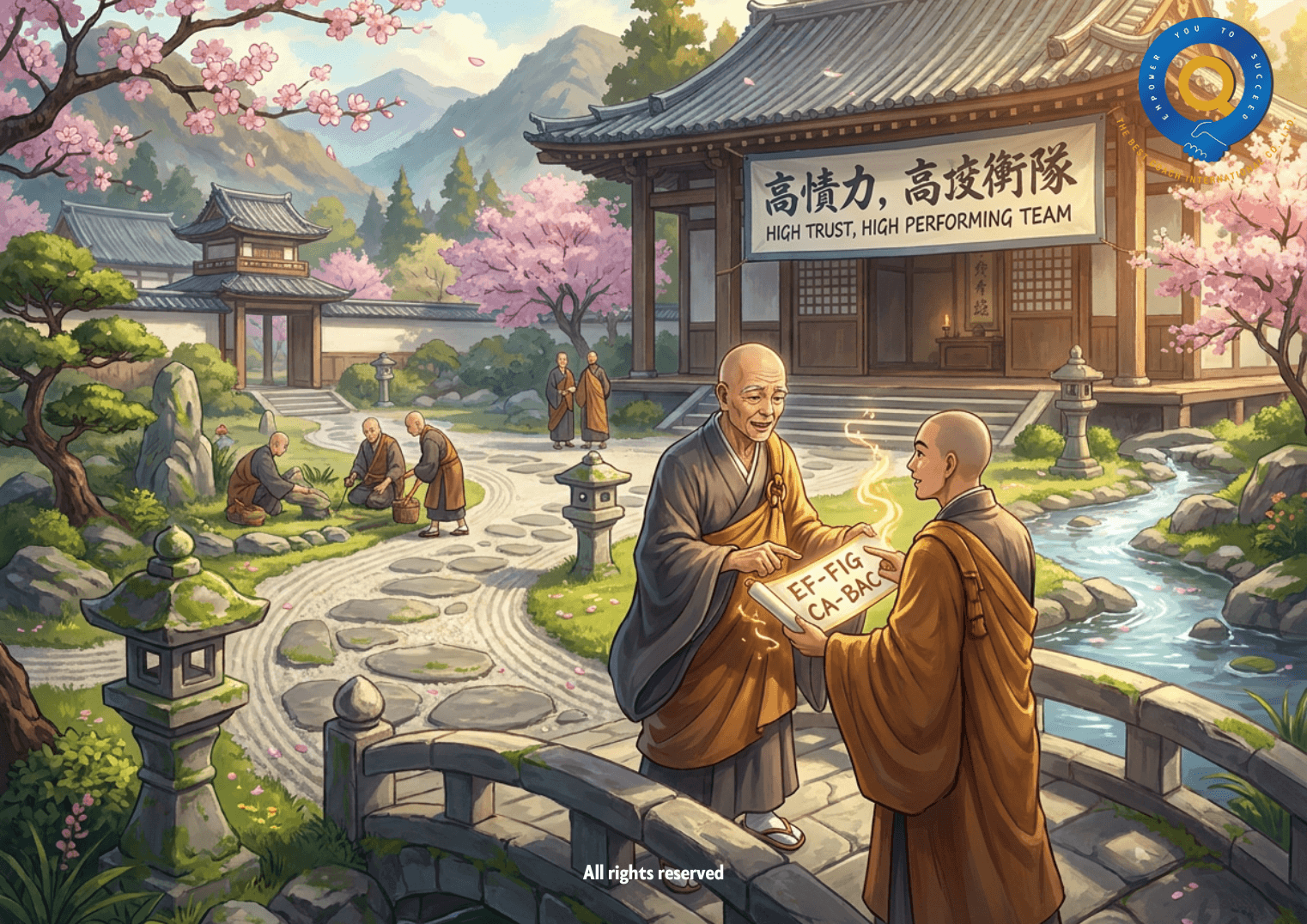
To help Tom (and leaders like him), I introduced two frameworks that serve as the operating system for any winning team, in any industry: EF-FIG and CA-BAC.
At first glance, they look like alphabet soup. But in practice, they are the difference between a team that merely "shows up" and a team that is unstoppable.
1. The EF-FIG Framework (The Performance Engine)
Tom had a habit of avoiding difficult conversations. Many leaders do. We call this "letting the culture slide." The EF-FIG framework puts structure to accountability.
- E: Expectations. You cannot hold someone accountable to a standard they don't know exists. We discussed setting crystal-clear, realistic expectations. No ambiguity.
- F: Follow Up. Goals without checkpoints are just wishes. We talked about consistent follow-through.
- F: Feedback. This is the breakfast of champions. Tom needed to deliver both positive and constructive feedback consistently, not just during annual reviews.
- I: Improvement Plan (PIP). If feedback is ignored, the culture is at risk. The PIP (Performance Improvement Plan) is the safety net for the individual and the standard.
- G: Goodbye. This is the hardest part. If the PIP doesn't work, it's time to part ways. Keeping a toxic or underperforming player hurts the entire team—it's a disservice to the high performers.
This framework gave Tom the courage to stop "hoping" people would improve and start managing the process.
2. The CA-BAC Framework (The Winning Culture)
Performance without culture is a house of cards. To build a High Trust team, Tom needed the CA-BAC philosophy:
- C: Common Goals. The team’s goals must override individual agendas.
- A: Alignment. Mindset, beliefs, and behaviors must point in the same direction. A strategy is useless without alignment.
- B: Bond. This is the secret ingredient. Do your team members care about each other like family? Do they have a "One Team, One Goal" mentality?
- A: Accountability. Owning the outcome, no matter what. No blame games.
- C: Capabilities. You need strong individual players, but when you multiply them? You get exponential growth.
The "Secret Sauce"
As we integrated the EF-FIG and CA-BAC frameworks, I saw a physical shift in Tom. The tension in his shoulders eased. He realized that building a high-trust team wasn't about being a charismatic cheerleader; it was about applying a system.
He looked at me and said something profound: “Trust is the secret sauce. It’s the most critical success factor of my business.”
Tom had a breakthrough. He realized that his legacy wouldn't come from the contracts he signed, but from the leaders he developed.
By the end of our session, Tom was inspired. His homework was clear:
- Cascade the EF-FIG and CA-BAC frameworks to his teams in global locations.
- Emphasize the "High Trust" philosophy in every conversation.
- Shift from using his strengths by instinct to using them with intention.
He was ready to stop managing tasks and start leading people.
The Final Takeaway
Tom's story is not unique. It is the story of every executive who suddenly realizes that the corner office is lonely if you don't have a team you can trust behind you.
Whether you are running a team of ten or ten thousand, the formula is the same. You must provide clear expectations (EF-FIG) and foster a unified identity (CA-BAC).
As a global executive and leadership coach, I have seen these frameworks transform organizations from the top down. The strategies and frameworks always work—if you really work them.
If you are ready to stop guessing and start building a High Trust, High Performing Team that serves as your legacy, perhaps it’s time to put these frameworks into practice. As Tom would say, the secret sauce is Trust. And trust is built one intentional conversation at a time.
If you aspire to build the high-trust, high-performing teams like Tom, let’s have our intentional conversation soon!
About Atip Muangsuwan: Atip is an executive leadership coach who specializes in helping high-achieving leaders overcome internal barriers to unlock their full potential and drive organizational success. Through a blend of strategic frameworks and profound personal insights, he empowers leaders in transforming their mindsets, emotional states, and behaviors for lasting impact.
SHARE :
Facebook
LinkedIn
Twitter