


The Corner Office Epiphany: How to Turn a Disobedient Subordinate into a True Partner
By Atip Muangsuwan
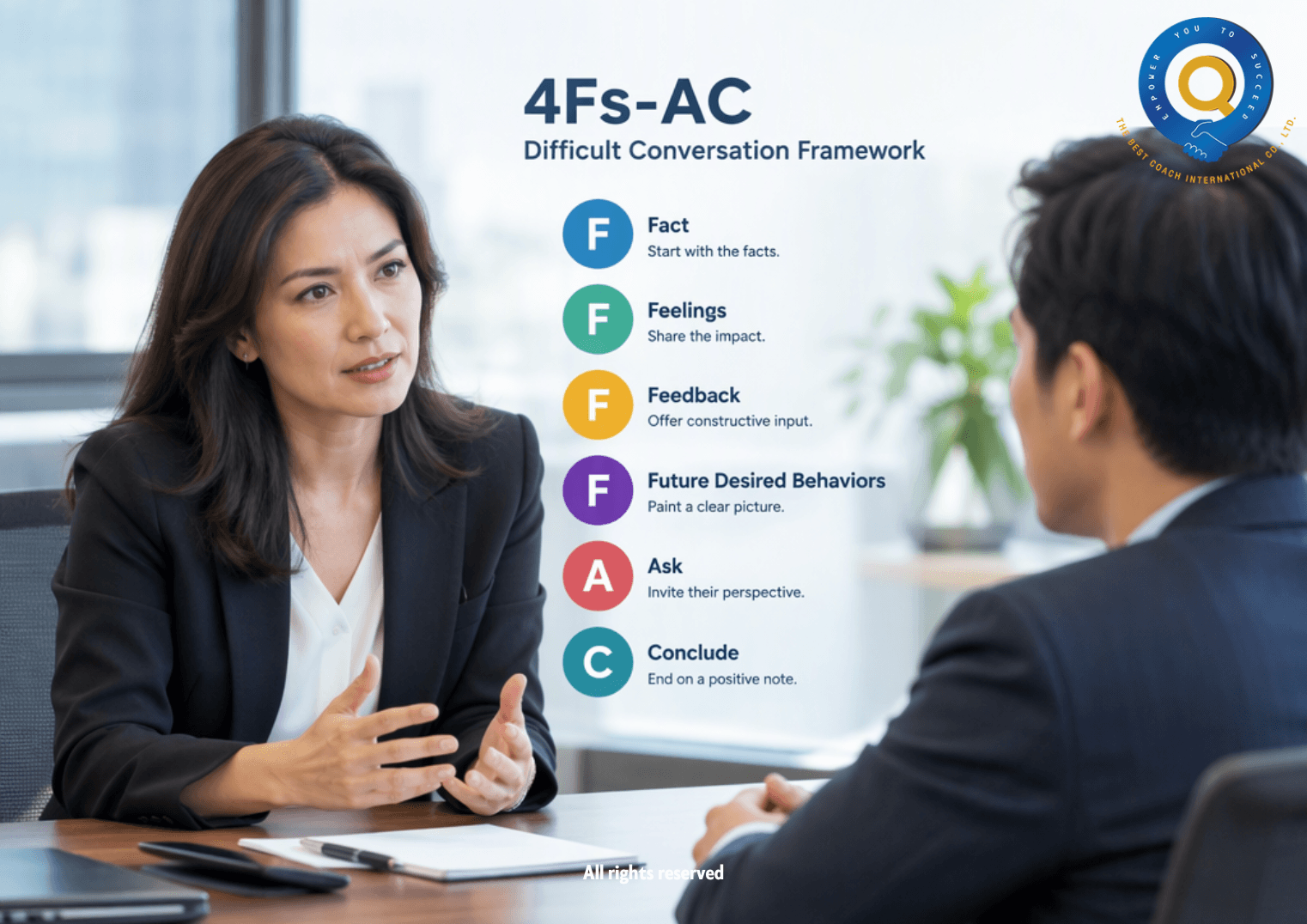
“One way to manage a difficult subordinate is to have a difficult conversation with them.”
Atip Muangsuwan
CEO Coach and Coach Supervisor
You’ve finally made it. The title is new, the office is bigger, and the weight of responsibility settles onto your shoulders. It’s a moment you’ve worked for your entire career.
But for many new leaders, this moment of triumph is quickly followed by a chilling realization: the skills that got you here are not the ones that will make you successful now.
This was the exact place “Helen” found herself. A rising star at a global hospitality firm, Helen had just been promoted to lead her first team. For years, she’d been blessed with what she calls “the easy road”—subordinates who were competent, cooperative, and respectful.
Then came the one.
We’ll call him the “equal-opportunity delegator.” The one who, when Helen assigned him a task, would calmly look at her and suggest she do it herself. He was a master of quiet defiance, a professional at pushing boundaries just enough to undermine her authority without breaking any formal rules.
Helen was stuck. She was losing sleep, doing his work on top of her own, and feeling a profound sense of failure. “I don’t want to do all the work myself,” she confessed to me, the frustration evident in her voice. “I just want him to understand his role. I want to learn how to be a better people manager.”
She was caught in a trap familiar to so many new leaders: the Pleaser’s Paradox. She was so afraid of having a difficult conversation that she was inadvertently teaching her subordinate that he could get away with anything. She hadn’t yet tried to seriously manage him, blaming her own busyness and her desire to avoid conflict.
This is where the real work of leadership begins. And it’s where I shared a simple, powerful framework that can turn any difficult conversation from a source of dread into a tool for transformation.
The Secret Weapon: The One-on-One
First, we established a new ritual. Forget waiting for a crisis. The secret weapon of effective leaders is the regular, weekly one-on-one session. This isn’t a status update; it’s a 30-minute investment in your most important asset—your people. It’s a safe, predictable space where you can set clear goals, give positive feedback, and yes, handle difficult topics with intention.
Within this space, we applied my 4Fs-AC Difficult Conversation Framework. It’s a simple, six-step recipe for handling any high-stakes conversation with clarity and confidence.
1. F – Fact: Start with the undeniable truth. Not your interpretation, but the objective fact.
“In our last three team meetings, when I’ve assigned you a project, you’ve suggested I complete it myself.”
2. F – Feelings: Share the impact of that fact on you. This is not about being emotional; it’s about being human.
“When that happens, I feel frustrated and concerned that we’re not aligned on our roles.”
3. F – Feedback: Offer constructive, forward-looking feedback.
“My expectation is that when you’re assigned a task, you either take ownership of it or you come to me with specific questions to help you complete it.”
4. F – Future Desired Behaviors: Paint a clear picture of the successful outcome.
“Going forward, the behavior I expect to see is proactive ownership. I want to see you break down the steps and execute them, and I’m here to support you in that process.”
5. A – Ask: This is the most crucial step. Make it a dialogue, not a monologue.
“This is what I’m seeing and what I expect. I’d love to hear your thoughts and perspective on this. What’s your take?”
6. C – Conclude: End on a positive, collaborative note.
“Thank you for your honesty. I’m confident that with this clarity, we can build a much stronger and more effective working relationship. I really look forward to it.”
This framework gives you the words and the structure to turn a confrontation into a collaboration.
But before Helen could have this conversation, we needed to address her own confidence. This is the final, critical piece of the puzzle, a step many leaders miss: Getting the Green Light.
Helen’s homework was to go to her manager. She shared the facts, her feelings, and her plan to conduct this conversation. By being transparent, she not only prepared her boss but also secured the backup she needed. Her manager’s support was the armor she needed to walk into that room with strength.
Her one-sentence summary at the end of our session was profound: “Be strong.” My advice to her was to be both strong and direct.
That’s what my coaching is all about. It’s about helping leaders like Helen—and you—move from the anxiety of “managing a difficult subordinate” to the art of “leading an effective team member.” It’s about replacing the fear of conflict with a clear, confident framework for communication.
Helen’s journey from a stressed-out pleaser to a confident, direct leader is a journey every new manager must take. It requires a shift in mindset and a toolbox of practical strategies.
And it’s a journey you don’t have to take alone.
If you’re a new leader feeling the weight of a difficult conversation on your shoulders, or if you’re a seasoned executive looking to build a more resilient and high-performing culture, I can help. Let’s connect and turn your toughest leadership challenges into your greatest strengths.
Ready to lead with confidence? Let’s talk.
About Atip Muangsuwan: Atip is an executive leadership coach who specializes in helping high-achieving leaders overcome internal barriers to unlock their full potential and drive organizational success. Through a blend of strategic frameworks and profound personal insights, he empowers leaders in transforming their mindsets, emotional states, and behaviors for lasting impact.
SHARE :
Facebook
LinkedIn
Twitter
RECOMMENDED ARTICLES :